Gary Carr: The Unseen Craft of a Modern Acting Chameleon
Executive Summary: This article provides a comprehensive exploration of actor Gary Carr’s career, examining the deliberate choices and unique methodology that have established him as one of the most respected and versatile performers of his generation. Moving beyond simple biography, we dissect his transformative roles across British and American television, stage, and film, analyzing the technical skill, emotional intelligence, and strategic career navigation that define his work. We will uncover how Gary Carr consistently disappears into complex characters, the professional ethos that guides his selections, and the significant, yet often understated, impact he has on contemporary narrative storytelling.
Introduction
In an industry often preoccupied with overt celebrity, the most compelling artists are sometimes those who master the art of becoming unseen. They are the chameleons, whose profound skill lies not in cultivating a monolithic persona, but in its deliberate dissolution. Actor Gary Carr exemplifies this tradition. To audiences, he is the charming jazz singer Jack Ross in Downton Abbey, the ambitious journalist Thomas Browne in The Hour, and the resilient pimp CC Curtis in The Deuce. Yet, the man behind these indelible portraits remains an intriguing study in professional artistry. This deep dive is not merely a chronicle of roles but an examination of the craft, discipline, and intelligent career architecture of Gary Carr. We will explore how he builds characters from the ground up, navigates the transatlantic entertainment landscape, and delivers performances that resonate with authenticity, securing his place as a quietly formidable force in modern acting.
The Formative Foundations: Building a Versatile Instrument
Every actor’s approach is forged in their early training and initial professional experiences. For Gary Carr, this foundation was built at the prestigious Guildhall School of Music and Drama, one of the UK’s most rigorous conservatoires. This classical training emphasized textual analysis, physical theatre, and vocal precision—tools that provide a technical backbone for any character work. However, what distinguishes Gary Carr is how he subsumes this formal training into organic, lived-in performances. His early stage work, including notable productions at the National Theatre, required a level of projection and immediacy different from screen acting, honing his ability to command space and sustain emotional truth over a sustained arc in real time.
This period was crucial for developing the actor’s “instrument”—his own body, voice, and emotional range. It instilled a discipline that is evident in his meticulous preparation. Whether mastering the trumpet for The Deuce or the specific physicality of a 1920s jazz performer for Downton Abbey, Gary Carr approaches each role with a research-driven methodology. He doesn’t just play a character; he undertakes a process of embodiment, understanding the societal pressures, personal history, and unspoken desires that motivate every action. This foundational stagecraft is the invisible framework upon which all his screen performances are built, allowing for remarkable subtlety even in grand narratives.
Key Takeaway: Gary Carr’s rigorous classical training provided a versatile technical toolkit, which he leverages not for showy technique but for deep, research-driven character embodiment.
Breakthrough and British Television: Establishing a Presence
Gary Carr first came to significant public attention through the nuanced landscape of British television, a medium known for its character-driven narratives and literary sophistication. His role as Thomas Browne in the acclaimed BBC series The Hour was a masterclass in understated complexity. Set in a 1950s newsroom, the series was a tapestry of political intrigue and personal ambition. Browne, a journalist navigating racial and professional barriers, was not a stereotypical figure of victimhood but a three-dimensional professional maneuvering within a rigid system. Gary Carr portrayed him with a compelling mix of intelligence, vulnerability, and steely determination, refusing to let the character be defined solely by his race while authentically portraying the era’s specific prejudices.
This performance demonstrated Gary Carr’s ability to serve a larger ensemble while carving out a memorable, integral space for his character. It showcased his skill in historical verisimilitude—capturing the cadence, posture, and mindset of a past era without seeming antiquated. Following this, his casting in Death in Paradise as Officer Dwayne Myers offered a different challenge: bringing warmth and comic timing to a popular, long-running series. These early television roles established his range and reliability, proving he could anchor a B-story with depth or provide essential levity, making him a sought-after talent for producers seeking actors who could deliver beyond the surface of the script.
*Key Takeaway: Carr’s early TV work in series like *The Hour* established his signature ability to portray layered, historically-set characters who resonate with modern emotional truth, marking him as a reliable and nuanced ensemble player.*
Crossing the Atlantic: The Strategic Leap to The Deuce
A defining moment in the career of Gary Carr was his transatlantic move to star in David Simon’s HBO series The Deuce. This was not merely a change of location but a strategic elevation into a different echelon of storytelling—raw, novelistic, and morally complex. The series, exploring the birth of the porn industry in 1970s New York, required actors capable of navigating extreme material with humanity and unsentimental clarity. Gary Carr was cast as CC Curtis, a charismatic and ruthless pimp whose journey is one of the show’s most chilling and tragic arcs. This role represented a significant pivot, demanding a physical and psychological transformation that pushed far beyond his previous work.
What made his performance as CC Curtis so devastating was its lack of mustache-twirling villainy. Gary Carr located the character’s twisted logic, his warped sense of entrepreneurship, and even his fragile pride. He showed how Curtis was both a product and a perpetuator of a brutal ecosystem. The role required mastering a new accent, a distinctively cool yet predatory physicality, and portraying a steep descent into paranoia and violence. This successful foray into American premium television proved Gary Carr’s versatility was not limited by genre or accent, and it solidified his reputation as an actor fearless in confronting dark, challenging material. It was a career-defining risk that paid immense artistic dividends.
*Key Takeaway: His role as CC Curtis in *The Deuce* was a deliberate, high-stakes career move that showcased Carr’s fearlessness and profound skill in humanizing an otherwise monstrous character, earning him critical acclaim in the demanding American market.*
The Craft of Character: Deconstructing the Carr Methodology
To understand the consistent quality of Gary Carr’s work, one must look at his repeatable, yet deeply personalized, process. His methodology can be defined as a fusion of intense external research and internal emotional mapping. For a role like jazz musician Jack Ross in Downton Abbey, the external work was clear: learning to mime the trumpet convincingly, studying the performance style of 1920s bandleaders, and adopting the specific elegance of a man who is both an entertainer and an outsider in a aristocratic world. This external precision gives the performance authenticity, allowing the audience to believe in the character’s reality without distraction.
The internal work is where Gary Carr truly excels. He constructs a psychological backstory, answering questions the script may never address: What did this character lose? What do they truly want versus what they say they want? How do they walk when they think no one is watching? This internal mapping allows him to react in the moment with genuine spontaneity. A perfect case study is a scene where his character, CC Curtis, feels his control slipping. Rather than playing generic anger, Gary Carr might channel it into a terrifyingly quiet calculation or a specific, petty act of dominance. The reaction feels uniquely born of that character’s psychology, not the actor’s predetermined choice. This balance between prepared technique and in-the-moment truth is the hallmark of his craft.
Key Takeaway: Gary Carr’s acting methodology is a powerful synergy of meticulous external research and deep internal character psychology, enabling him to deliver performances that are both authentically detailed and spontaneously truthful.
Navigating Industry Realities: The Actor as Strategic Architect
Beyond raw talent, a sustained career requires astute navigation of the industry’s realities. Gary Carr has demonstrated a keen understanding of this, functioning as the strategic architect of his own path. His choices reflect a pattern of calculated diversification. He has interspersed high-profile television roles with independent film work, such as The Gentleman, and returns to the stage, ensuring he exercises different creative muscles and avoids typecasting. This strategy mitigates the volatility of an acting career and maintains his artistic currency. He is not merely waiting for offers but curating a portfolio of roles that challenge him and expand his range.
This approach also involves a nuanced understanding of brand and perception. By selecting roles across different genres, eras, and moral spectrums, Gary Carr prevents the audience—and crucially, casting directors—from pigeonholing him. He is not “the charming love interest” or “the period drama guy”; he is a transformative performer. Furthermore, his move into producing, as seen with some of his more recent projects, indicates a desire to control narrative and create opportunities, a natural evolution for an artist with a clear vision. This forward-thinking agency is what separates working actors from enduring artists.
Key Takeaway: Carr strategically architects his career through deliberate role diversification and gradual creative expansion, actively shaping his professional trajectory to avoid typecasting and ensure long-term artistic growth.
The Semantics of Performance: Analyzing Key Scenes
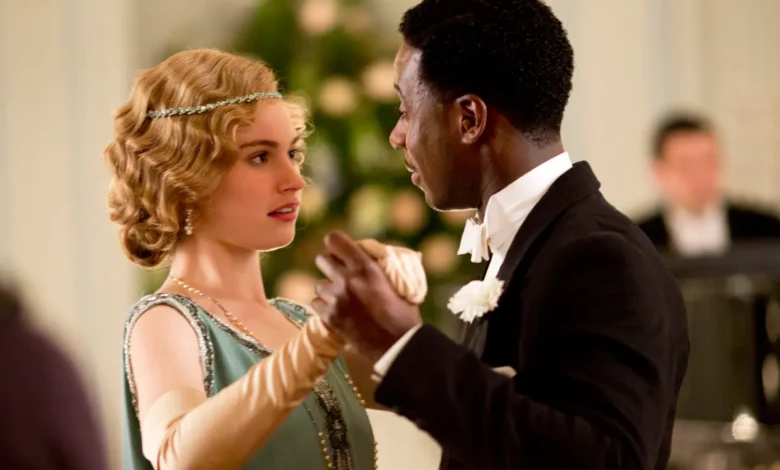
A granular look at specific scenes reveals the masterful subtleties of Gary Carr’s technique. In Downton Abbey, his character Jack Ross shares a charged scene with Lady Rose. The dialogue is about music, but the subtext is about forbidden attraction and social impossibility. Gary Carr plays the scene with a guarded warmth. His smile is genuine but brief, his eyes constantly scanning the environment for watching eyes. He holds his body with professional grace, yet there’s a slight tension in his shoulders—the physical manifestation of knowing this connection, however sincere, exists within dangerous constraints. He conveys entire chapters of social understanding without a word of exposition.
Contrast this with a scene from The Deuce where CC Curtis confronts a rival. Here, Gary Carr uses stillness as a weapon. His voice drops to a conversational, almost friendly tone, while his eyes become utterly vacant of empathy. The threat isn’t in a raised voice but in the chilling contrast between the calm delivery and the violent intent. He might perform a small, incongruous action—straightening his cufflink—that underscores his total, psychopathic control. These choices are not in the script; they are the inventions of an actor who has fully inhabited the character’s worldview, using minute physical and vocal details to communicate volumes about power, threat, and personality.
Key Takeaway: Through meticulous control of subtext, physicality, and vocal tone, Carr builds layered performances where the most powerful communication often happens in the silences and subtle gestures between the lines.
Cultural Impact and Representation: The Significance of His Roles
The work of Gary Carr carries a cultural significance that extends beyond individual performance. In taking on roles like Jack Ross and Thomas Browne, he entered narratives—the country house drama, the 1950s newsroom—where Black characters were often peripheral or entirely absent. His presence in these spaces is itself a statement, normalizing inclusion within historically white storyworlds. However, Gary Carr ensures this impact is rooted in character integrity. Jack Ross is not a “Black character” defined solely by his race in a white world; he is a talented, complex man who happens to be Black navigating that world—a crucial distinction that avoids reductionist storytelling.
His role as CC Curtis engages with representation in a more fraught, but no less important, manner. Portraying a pimp is a narrative minefield, with risks of perpetuating harmful stereotypes. Gary Carr’s achievement is that he portrays Curtis not as a stereotype but as a specific, broken individual within a specific, exploitative system. The show, and his performance, indict the environment that creates such figures. This approach encourages a more critical audience engagement with on-screen representation, moving beyond the simple demand for “positive” images to a demand for complex, accountable, and humanized portrayals, even of difficult figures. In this way, Gary Carr contributes to a more mature and nuanced landscape of on-screen diversity.
Key Takeaway: Carr’s roles often carry significant cultural weight, advancing representation not through simplistic iconography but through the insistence on fully humanized, complex characterizations that challenge narrative stereotypes and broaden storytelling possibilities.
The Definitive Guide to Ayden Heaven: Crafting Digital Sanctuaries in a Connected World
The Actor’s Ecosystem: Collaboration and Directorial Synergy
No actor works in a vacuum. The quality of Gary Carr’s output is also a product of his collaborations with visionary creators. Working with David Simon on The Deuce meant engaging with a showrunner known for sociological depth and an almost journalistic approach to character. This environment demanded a particular kind of truthfulness—one that aligned perfectly with Carr’s own method. Similarly, being directed by figures like Philip Martin on The Hour or appearing in a Guy Ritchie film like The Gentleman requires adaptive agility. Each director has a different language: one might prioritize emotional realism in long takes, another the precision of choreographed rhythm and style.
Gary Carr has shown a chameleonic ability to thrive in these diverse ecosystems. He understands that his performance is one piece of a directorial and editorial vision. On set, this translates to a professional who is prepared, collaborative, and able to offer multiple variations on a scene to serve the edit. This reliability makes him a valuable asset on complex productions. The trust established with directors and writers often leads to repeat collaborations and more daring creative opportunities, as seen when a director like David Simon casts an actor again, knowing they can handle profound narrative complexity. This symbiotic relationship between actor and creator is a critical, though often overlooked, engine of great television and film.
Key Takeaway: Carr’s success is amplified by his skilled collaborations with auteur showrunners and directors, where his prepared, adaptive, and reliable professionalism allows him to excel within vastly different creative visions.
The Evolution and Future Trajectory
Analyzing the arc of Gary Carr’s career reveals a clear evolution: from skilled ensemble player to complex lead contender, and now to creative producer. His early roles demonstrated capability and range; his middle-period work, particularly in The Deuce, showcased a capacity for transformative, lead-level depth; and his recent activities point to a artist seeking greater creative authority. This trajectory follows the model of actors who evolve from interpreters to storytellers, using their hard-earned industry understanding to shape projects from the ground up.
Looking forward, the path for an actor of his caliber is rich with possibility. The current trend in global storytelling favors limited series with novelistic depth, a format perfectly suited to his skills. One could envision Gary Carr leading a prestige limited series, perhaps a literary adaptation or a contemporary thriller. Furthermore, his foray into producing suggests he may begin to develop material that addresses gaps he perceives in the market, potentially telling stories from perspectives he finds compelling but under-represented. The future likely holds not just more acclaimed performances, but also projects that bear the distinct creative signature of Gary Carr as a developing auteur.
Key Takeaway: Gary Carr’s career evolution—from versatile performer to potential producer-auteur—mirrors a strategic journey toward greater creative control, positioning him for future work as both a leading man and a narrative originator.
Comparative Analysis: Carr’s Place Among Contemporaries
To fully appreciate Gary Carr’s unique position, it is helpful to contextualize his approach within the broader field of his acting contemporaries. The following table contrasts key aspects of his career and methodology with generalized trends observed among other respected actors of his generation.
| Career Aspect | Gary Carr’s Approach | Common Alternative Approaches |
|---|---|---|
| Typical Role Selection | High degree of variance across genre, era, and character morality. Actively avoids a consistent “type.” | Often builds a recognizable personal “brand” (e.g., the relatable everyman, the intense method actor, the comic specialist) and selects roles within that lane. |
| On-Screen Presence | Notoriously chameleonic; the actor’s own personality is subsumed entirely by the character’s specific traits. | Often projects a core, recognizable persona that tints each character, creating a strong star identity audiences follow from project to project. |
| Primary Career Engine | Seems driven by artistic challenge and the process of transformation itself, with acclaim following as a byproduct. | May be more visibly driven by a combination of artistic and commercial ambitions, seeking projects with high awards potential or broad audience reach. |
| Relationship to “Star” Power | Cultivates a low-profile, private off-screen life, allowing the work to speak entirely for itself. | Often leverages off-screen personality, media presence, and public persona to amplify projects and build a marketable star identity. |
| Industry Trajectory | Steady, incremental ascent through respected ensemble work to complex leads, with a focus on craft longevity. | May experience more meteoric, headline-driven rises based on a single breakout role, requiring careful management of subsequent choices. |
Key Takeaway: Carr distinguishes himself through a deliberate eschewal of personal branding in favor of total character immersion, pursuing a craft-oriented, rather than celebrity-oriented, path that prioritizes long-term artistic integrity.
A Practical Framework for Aspiring Performers
The career of Gary Carr offers more than just interesting analysis; it provides a practical, inspirational framework for aspiring actors. The first lesson is the non-negotiable value of craft. Before any thoughts of fame or specific roles, the work must be on developing a reliable, versatile instrument through training and continuous practice. As one veteran casting director once noted, “The most exciting actors in the room are often the most prepared, not the most desperate. They have done their homework on the character and themselves, which frees them to actually play.” This ethos mirrors Carr’s own evident preparation.
Secondly, his career underscores the power of strategic patience. Rather than chasing the most prominent role immediately, he built a reputation for excellence in substantial supporting parts. This established his professionalism and range with decision-makers, making him a trusted choice for larger, riskier opportunities when they arose. Aspiring performers can look to his path as a reminder that a sustainable career is a marathon, not a sprint, built on the consistent quality of work and the professional relationships nurtured along the way. Consider exploring the journeys of other character actors who have built decades-long careers for further inspiration on this model.
Key Takeaway: Carr’s career exemplifies a powerful model for aspiring actors: master your craft with relentless dedication, and build a sustainable career through strategic, patient choices that prioritize role quality and professional reputation over fleeting visibility.
The Unseen Impact: Legacy and Influence
While still in the midst of a thriving career, the early contours of Gary Carr’s legacy are becoming clear. His primary influence may be in reaffirming the supreme value of the character actor’s ethos in an age of personal branding. In an era where social media often encourages actors to market themselves as products, Carr’s commitment to self-erasure in service of the story is a powerful counter-narrative. He demonstrates that profound audience connection is forged not through personality, but through profound truth in portrayal. This sets a standard for peers and newcomers about where to focus creative energy.
Furthermore, his specific portrayals have permanently enriched the narratives they inhabit. It is now impossible to think of the final seasons of Downton Abbey without the complication and charm Jack Ross introduced, or of The Deuce without the haunting tragedy of CC Curtis. He has expanded the possibilities for Black British actors in period and transatlantic drama, not by making speeches about it, but by simply executing the work at such a high level that his casting becomes an obvious, rather than a groundbreaking, choice. This quiet normalization of excellence and diversity is perhaps his most enduring contribution to the industry’s evolving landscape.
Key Takeaway: Gary Carr’s growing legacy is that of a craftsman who elevates every project through transformative skill, quietly expanding narrative and representational possibilities by insisting that the character, not the actor’s persona, remains the absolute focus.
Actionable Insights Checklist
Before concluding, let’s distill the core insights from the career and methodology of Gary Carr into a actionable checklist for those interested in the craft of acting or creative career development:
- Prioritize Craft Foundation: Invest in formal training to build a versatile, reliable technical instrument.
- Embrace Research as Part of the Role: Go beyond the script to build a character’s internal and external world.
- Seek Strategic Variety: Actively pursue roles that challenge different skills to avoid typecasting and grow your range.
- Master Subtext: Practice conveying complex emotions and intentions through subtlety, silence, and physicality.
- Collaborate Professionally: Be the prepared, adaptable actor that directors and writers want to work with repeatedly.
- Think Long-Term: Build a career based on sustained quality and relationships, not just on seeking breakout moments.
- Let the Work Speak: Consider cultivating a private off-screen life to ensure the audience’s focus remains on your performances.
Conclusion
Gary Carr represents a particular and precious kind of artistic integrity in modern entertainment. His career is a masterclass in the power of transformation, the intelligence of strategic choice, and the quiet dignity of prioritizing craft above celebrity. From the drawing rooms of Downton Abbey to the gritty streets of The Deuce, he has consistently demonstrated that the most powerful acting isn’t about being seen—it’s about allowing the audience to see only the character, in all their flawed, complex humanity. As storytelling continues to evolve across platforms and borders, the demand for actors of his calibre—those who are vessels for truth rather than icons of personality—will only increase. Gary Carr has built, with deliberate care and profound skill, a body of work that not only entertains but also deepens our understanding of the human condition, securing his status as a true and enduring artist of the screen.
Frequently Asked Questions (FAQ)
What is Gary Carr best known for?
Gary Carr is best known for his versatile roles across British and American television. He gained wide recognition as jazz singer Jack Ross in Downton Abbey and delivered a critically acclaimed performance as the complex pimp CC Curtis in the HBO series The Deuce. He also played significant roles in The Hour and Death in Paradise.
How did Gary Carr prepare for his role in The Deuce?
To prepare for the role of CC Curtis in The Deuce, Gary Carr undertook extensive research into the 1970s Times Square era and the psyche of his character. This involved mastering a specific American accent, studying the physicality and manipulative behaviors associated with the role, and working to understand the systemic environment that shaped Curtis, aiming to portray him as a nuanced individual rather than a stereotype.
Has Gary Carr done any stage work?
Yes, Gary Carr has a solid foundation in stage work, which is where he honed his craft. He is an alumnus of the Guildhall School of Music and Drama and performed in productions at esteemed venues like the National Theatre in London. This theatrical training is integral to the discipline and presence he brings to his screen performances.
What makes Gary Carr’s acting style unique?
Gary Carr’s acting style is unique for its chameleonic quality and deep commitment to character immersion. He is known for meticulous research and a psychological approach that subsumes his own persona entirely, resulting in performances that feel authentically lived-in. His ability to navigate vastly different genres and moral complexities with equal conviction sets him apart.
Is Gary Carr involved in any projects behind the camera?
Gary Carr has begun expanding his role in the industry by moving into producing. This shift indicates a desire for greater creative control and involvement in storytelling from the ground up. While he remains a sought-after actor, his work as a producer on upcoming projects points to his evolving trajectory as a creative architect.