Executive Summary
This in-depth exploration examines the multifaceted career of comedian Seann Walsh, moving beyond a singular, headline-dominating event to analyze his artistic journey, comedic craft, and place within the modern British entertainment landscape. We dissect the development of his stand-up persona, his strategic navigation of public controversy, and the nuanced process of rebuilding a career in the spotlight’s unforgiving glare. The article provides a holistic view of Walsh as a working comedian, writer, and performer, offering insights into the mechanics of live comedy, the psychology of public perception, and the enduring power of live performance as a tool for personal and professional redemption.
Introduction
In the ecosystem of British comedy, few figures have experienced a public narrative as sharply defined by a single moment as Seann Walsh. For many, the name instantly conjures a specific tabloid image from late 2018. Yet, to reduce a career spanning over a decade to that flashpoint is to ignore the intricate tapestry of craft, struggle, and resilience that defines the life of a professional comedian. This article aims to look past the viral headlines and explore the substance behind the persona: the development of Seann Walsh‘s distinctive stand-up voice, the impact of intense public scrutiny on artistic output, and the deliberate, often painful, process of reclamation. The journey of Seann Walsh serves as a compelling case study in modern fame, the court of public opinion, and the raw, vulnerable act of returning to the stage not just to tell jokes, but to tell your story.
The Forge of a Comedic Voice: Early Influences and Breakthrough
Every comedian’s style is a alchemy of influence, experience, and personal temperament. For Seann Walsh, his early work positioned him as a relatable chronicler of youthful inertia and observational frustration. His comedy emerged from a tradition of self-deprecating, narrative-driven British stand-up, echoing tones of nineties and early 2000s greats while forging its own path.
His breakthrough on the live circuit and subsequent television appearances on shows like Mock the Week and Live at the Apollo showcased a specific energy. Walsh’s stage presence was—and remains—physically expressive, often embodying the exasperation of his anecdotes. His material mined humor from the gap between youthful ambition and mundane reality, from the pitfalls of modern dating to the awkward transition into adulthood. This established Seann Walsh as a recognisable talent with a strong, developing point of view, building a foundation that would later be critically tested.
Key Takeaway: Seann Walsh’s early career established him as a physically expressive, relatable observer of generational frustration, building a solid foundation within the UK’s competitive stand-up ecosystem.
Craft in the Spotlight: Analyzing Stand-up Technique and Persona
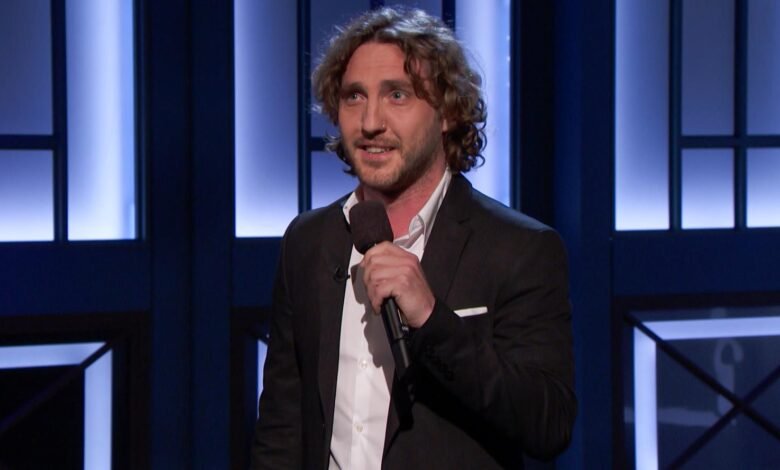
To understand any comedian’s work, one must look at the technical machinery beneath the laughs. Seann Walsh’s technique is rooted in heightened physical storytelling. He doesn’t just recount an embarrassing moment; he re-enacts it, using his entire body to convey the specific anxiety of a social misstep or a silent internal panic. This method transforms personal anecdotes into shared, visceral experiences for the audience.
His persona on stage is that of the perennial “almost” man—almost successful, almost sorted, almost adhering to social norms. This creates a crucial comic tension. The writing underpinning this persona relies on sharp, unexpected turns of phrase within familiar scenarios. He crafts vivid imagery—what some in comedy circles call “joke pictures”—that stick with an audience long after the punchline. Analyzing a Seann Walsh routine offers a masterclass in how personal vulnerability, when carefully framed and rhythmically delivered, becomes universal comedy.
Key Takeaway: Walsh’s comedic power derives from a fusion of exaggerated physical re-enactment and finely written, self-deprecating narratives that turn personal anxiety into universal humor.
The Anatomy of a Public Scandal: Media, Perception, and Career Impact
In late 2018, the career trajectory of Seann Walsh was violently recalibrated. Photographs and subsequent media coverage of an event during his tenure on Strictly Come Dancing ignited a firestorm of public controversy. This moment presents a critical study in the modern media landscape, where a personal failing is amplified into a 24-hour narrative, dissected across social media, tabloids, and even mainstream news.
The impact was immediate and severe. The dominant public perception of Seann Walsh shifted from “comedian” to “tabloid figure.” Live bookings were affected, and the cloud of the scandal threatened to permanently overshadow his artistic work. This period highlights the precarious nature of a public-facing career, where audience goodwill—built over years of touring—can feel perilously fragile. The scandal became an inescapable part of his biography, a prefix to his name that he would have to consciously and creatively address.
Key Takeaway: The 2018 scandal demonstrated how rapidly intense media scrutiny can redefine a public persona, creating a professional challenge that requires strategic, long-term navigation beyond mere crisis management.
The Road Back: Strategic Re-entry and “The Renegade” Narrative
The path following a public setback in comedy is rarely linear. For Seann Walsh, the strategic re-entry began not with a press statement, but with a return to the fundamental unit of his craft: the live stand-up set. His 2020 show, The Renegade, was a pivotal document in this journey. It served as both a comeback vehicle and a necessary exorcism.
The show tackled the controversy head-on, but did so within the framework of stand-up comedy—using humor, pathos, and brutal honesty to reframe the narrative. This was a high-wire act: too much defiance could seem unrepentant; too much apology could drain the comedy of its edge. Walsh’s approach was to contextualize the event within a broader, often darkly funny exploration of his own flaws, mental health, and the surreal experience of being publicly vilified. This transformed him from a passive subject of news into an active author of his own story, a crucial psychological and professional shift.
Key Takeaway: Walsh’s strategic comeback centered on reclaiming his narrative through stand-up, using the art form to process public controversy on his own terms and reconnect with audiences through shared vulnerability.
Writing Beyond the Stage: Scriptwriting and Broader Creative Pursuits
While stand-up remains his primary outlet, Seann Walsh has consistently worked to develop his voice as a writer. His contributions to panel shows require a specific skill in quick, topical gags, but his scriptwriting ambitions reveal a different creative muscle. Co-writing the sitcom Big Bad World and developing other television projects demonstrates a desire to build sustained comic worlds and characters.
This expansion into narrative writing is a natural evolution for many stand-ups. It allows for exploration of themes that a five-minute club spot cannot contain and builds career resilience. For an artist like Walsh, whose public story contains so much inherent drama, the move into longer-form storytelling offers a channel to process and fictionalize experience. These pursuits, though less public than touring, are essential to understanding his complete professional identity and long-term artistic goals.
Key Takeaway: Walsh’s work in scriptwriting and development represents a strategic diversification of his creative output, aiming to build narrative depth and career longevity beyond the immediacy of the live stand-up stage.
The Psychology of Performance: Vulnerability as a Comedic Tool
At its most potent, stand-up comedy is an exchange of vulnerability. The performer offers a piece of themselves—an insecurity, a failure, a fear—and the audience reciprocates with laughter and recognition, creating a temporary bond. Post-2018, Seann Walsh’s relationship with this dynamic became profoundly more complex. His vulnerability was no longer a curated stage device; it was a public fact.
This forced a new level of authenticity into his work. The persona of the hapless everyman now carried the weight of real, documented life events. His material began to grapple more directly with themes of guilt, shame, and self-sabotage. This isn’t merely therapeutic public confession; it is advanced comedic craft. By channeling genuine psychological struggle into his act, Walsh elevates his comedy from simple observation to something more cathartic and emotionally resonant for audiences who have also faced personal reckoning.
Key Takeaway: The undeniable reality of his public experience pushed Walsh’s comedy into a realm of deeper, more authentic vulnerability, transforming his performance into a shared catharsis that strengthens the audience-performer connection.
The Business of Being Funny: Touring, Development, and Industry Navigation
Behind the artistry lies a business. A comedian like Seann Walsh operates within a sophisticated ecosystem of agents, promoters, commissioners, and publicists. Navigating a career after significant controversy involves business decisions as much as creative ones. Which promoters will book you? What size venues are viable? How is the tour marketed?
The successful rollout of The Renegade tour was a business case study in measured re-establishment. It likely involved playing trusted, supportive comedy clubs before graduating to larger theatres, carefully managing media interactions, and allowing word-of-mouth from live audiences to rebuild his reputation as a performer first. This behind-the-scenes navigation is critical. It requires a trusted team and a clear, patient strategy that prioritizes long-term artistic credibility over short-term sensationalism.
Key Takeaway: Rebuilding a comedy career post-controversy demands a shrewd business strategy that patiently re-establishes market viability through trusted live circuits and lets artistic merit, rather than PR, lead the recovery.
Evolution of Material: From Club Gags to Thematic Storytelling
Tracking the evolution of a comedian’s setlist reveals their artistic growth. Early Seann Walsh material was packed with the high-density, punchline-driven jokes necessary to survive and thrive in the competitive club scene. These were expertly crafted bits about hangovers, lazy flatmates, and dating woes—universal topics with a sharp, personal twist.
His more recent work, particularly in his hour-long touring shows, shows a shift toward thematic, narrative-driven storytelling. The jokes are still present and potent, but they now serve a larger arc about a specific period in his life or a central emotional theme. This evolution is a sign of a maturing comic voice. It moves from “here are some funny things that happened to me” to “here is a chapter of my life, with all its humor, pain, and irony, and this is what I learned.” This progression mirrors the journey of many great stand-ups who use the form for deeper exploration.
Key Takeaway: Walsh’s material has matured from discrete, punchline-heavy club sets into cohesive, thematic hours that use narrative structure to explore complex personal and emotional landscapes, marking his development as a storyteller.
The Critical and Public Reception: Reviews, Audience Rapport, and Shifting Tides
Public perception is a mercurial force. The critical reception of Seann Walsh’s work post-2018 offers a fascinating map of shifting tides. Initial reviews of The Renegade often framed the show through the lens of the scandal, sometimes unable to separate the art from the biography. However, as the tour progressed and word spread, a noticeable shift occurred.
Later reviews and, more importantly, audience reactions began to foreground the comedy itself—its craftsmanship, its emotional honesty, and its sheer funniness. This highlights a crucial dynamic: while media defines a initial narrative, sustained live performance has the power to rewrite it. The nightly rapport with a theatre audience, the shared laughter in a dark room, acts as a counterweight to tabloid judgment. For Walsh, winning back an audience one laugh at a time proved to be the most effective rebuttal.
Key Takeaway: While media narratives are powerful, the consistent, direct experience of a powerful live performance remains the most potent tool for a comedian to reshape public and critical perception over time.
A Case Study in Authenticity: The “Strictly” Chapter Re-examined
The Strictly Come Dancing chapter remains an indelible part of the Seann Walsh story. A useful exercise is to re-examine it not as gossip, but as a case study in the collision of different entertainment formats. Reality television, especially a show like Strictly, sells a curated, fairy-tale narrative of transformation and partnership. Stand-up comedy, at its best, traffics in unvarnished truth.
Walsh, fundamentally a comedian used to exposing flaws, was operating within a system designed to manufacture glitter and glamour. This inherent tension was perhaps unsustainable. The subsequent fallout illustrated the vast difference between the controlled vulnerability of a comedy stage and the unbidden, all-consuming vulnerability of a media scandal. His later work can be seen as an attempt to reconcile these two experiences—to process a reality-TV level of exposure through the authentic, analytical lens of a comic.
Key Takeaway: The Strictly incident exemplifies the fundamental clash between the manufactured narratives of reality TV and the raw authenticity demanded by stand-up comedy, a conflict that ultimately forced a painful but artistically fertile public self-examination.
Defining Modern Comedic Comeback
A modern comedic comeback is a multi-phase process that extends beyond simply returning to the stage. It involves a strategic, public re-contextualization of one’s narrative through artistic output. Unlike a corporate reputation management campaign, it requires the performer to absorb the event into their material, using humor and insight to reframe the conversation and demonstrate growth. Success is measured not in erasure of the past, but in the integration of that past into a more complex, resilient, and compelling artistic identity. For a figure like Seann Walsh, this meant crafting a major touring show that addressed the elephant in the room with such candor and comedy that it ultimately allowed the audience to see past it and re-engage with the performer as an artist.
The Role of Social Media in a Comedian’s Brand
For a modern comedian, social media is a double-edged sword. It’s a direct marketing channel, a testing ground for material, and a platform for personality. Yet, it is also the arena where public controversies are inflamed and dissected in real-time. Seann Walsh’s relationship with platforms like Twitter (now X) has necessarily evolved.
Where once it might have been a place for off-the-cuff gags and fan interaction, it now likely requires more careful curation. The line between authentic engagement and self-protection is thin. Many comedians in similar positions choose to use social media primarily as a broadcast tool for tour dates and professional updates, pulling back from the more personal, reactive engagement that can fuel media cycles. This strategic retreat is less about hiding and more about redirecting the core of the artist-audience relationship back to its most powerful venue: the live show.
Key Takeaway: In the wake of public scrutiny, a comedian’s use of social media often shifts from casual personal interaction to a more curated, professional broadcast model, protecting the space for authentic connection to occur primarily on stage.
Comparative Analysis: Navigating Public Scandal in Comedy
The experience of facing public scandal and rebuilding a career is not unique to Seann Walsh. Placing his journey alongside other comedians who have faced significant controversies reveals common patterns and distinct strategies. The table below outlines a brief, structured comparison.
| Comedian | Nature of Controversy | Primary Comeback Strategy | Key Differentiator |
|---|---|---|---|
| Seann Walsh | Personal conduct amplified by reality TV & tabloids. | Thematic, vulnerable stand-up hour directly addressing events & psychology. | Used a single, cohesive artistic statement (The Renegade) as the central engine of reputational repair. |
| A Hypothetical Peer “A” | Offensive material from past resurfacing. | Public apology, revised material, demonstrating evolved perspective. | Focus on demonstrating measurable change in viewpoint and material over time. |
| A Hypothetical Peer “B” | Legal/ethical allegations. | Extended hiatus, low-key return via clubs, avoiding direct address. | Strategy of decoupling the art from the artist by letting time pass and focusing purely on craft upon return. |
Key Takeaway: While all comedic comebacks require time and tailored strategy, Walsh’s approach was notably centered on a major, confessional artistic work as the primary vehicle for addressing and moving past the controversy.
Industry Perspectives: The View from Within Comedy
To gain a broader perspective, it’s valuable to consider how Walsh’s journey is viewed within the comedy community itself. Fellow comedians, bookers, and promoters operate with a different understanding of the person and the professional. As one established comedy promoter, who wished to remain anonymous, observed:
“The industry can be surprisingly forgiving if you do the work. Audiences buy tickets to see a performance, not a saint. What matters to us is reliability, professionalism on the road, and that the material connects. Seann faced the music, literally, by writing a show about it. He didn’t hide. He worked the rooms, rebuilt the trust with crowds night after night. In this business, that grind earns you a second act.”
This insider view underscores that while the court of public opinion judges on morality, the industry often judges on professionalism and artistic merit—a distinction that can allow for rehabilitation.
Key Takeaway: Within the professional comedy industry, recovery is often predicated on demonstrable work ethic, professional reliability, and the continued ability to write and deliver compelling material that connects with live audiences.
The Future Trajectory: Podcasting, Acting, and Legacy Building
Looking forward, the career of Seann Walsh is poised for continued evolution. The natural expansion for a stand-up of his profile includes deeper forays into podcasting, which offers a more conversational, long-form platform to explore ideas and interviews. Acting roles, particularly in comedic-dramatic parts, could leverage his proven ability to convey flawed humanity.
His legacy, however, will likely be intertwined with his comeback narrative. He is becoming a reference point for how a public figure can navigate a modern media scandal with artistic integrity. Future projects will be watched not just for their entertainment value, but as continuations of this story of recalibration. The challenge and opportunity lie in continuing to create work that acknowledges his past without being defined by it, ultimately transitioning from “the comedian who survived that scandal” back to simply, and powerfully, a respected comedian and writer.
Key Takeaway: Walsh’s future career path will likely involve strategic diversification into aligned media like podcasting and acting, with the ongoing aim of solidifying a legacy built on resilient artistry rather than past controversy.
Checklist for Understanding a Comedian’s Career Arc
Before drawing conclusions, consider this checklist for analyzing any comedian’s journey, especially one marked by public challenge:
- Examine the Foundational Craft: Understand their technical skills—writing, timing, stage presence—established before any controversy.
- Contextualize the Setback: Analyze the controversy within the frameworks of media ecology and public psychology, not just morality.
- Evaluate the Artistic Response: Assess how, or if, the event was integrated into their creative output. Was it addressed with artistic merit?
- Track the Business Recovery: Note the strategic, behind-the-scenes steps in touring, booking, and promotion.
- Gauge Audience Reconnection: Observe the qualitative shift in live audience reactions and critical reception over time.
- Identify Evolutionary Signs: Look for maturation in material, moving from isolated jokes to narrative or thematic depth.
- Consider Industry Standing: Factor in the perceptions of peers, bookers, and promoters within the professional community.
- Map Future Directions: Project potential career diversification into writing, broadcasting, or other creative fields.
Conclusion
The story of Seann Walsh is far more than a cautionary tabloid tale. It is a robust, ongoing study in the resilience of creative identity. It demonstrates that while the digital age can define a person with breathtaking speed and brutality, the ancient, direct exchange of live performance possesses a unique power to redefine. From his early days as a gifted club comic to his current status as a writer-performer synthesizing personal history into art, Walsh’s trajectory underscores a fundamental truth about comedy: it is often forged in the gaps between who we are, who we pretend to be, and who we are perceived to be. His continued work represents not an escape from his past, but a sophisticated, comedic engagement with it, offering a compelling model for authenticity in an industry—and a world—often saturated with carefully managed fiction. The final act of this story remains unwritten, but the stage, diligently reclaimed, is firmly his once more.
Frequently Asked Questions (FAQs)
What is Seann Walsh best known for?
Seann Walsh is best known as a British stand-up comedian and writer who gained early prominence through live comedy and panel shows. While a 2018 media event during his time on Strictly Come Dancing brought him significant public attention, his core reputation rests on his stand-up specials, touring shows like The Renegade, and his observational comedic style.
How has Seann Walsh’s comedy style evolved?
Seann Walsh’s style has evolved from punchline-driven observational bits about youthful life into more narrative-driven, thematic hour-long shows. His recent work incorporates greater personal vulnerability and explores complex themes like public perception and personal accountability, marking a maturation from pure gag-telling to storytelling.
What was Seann Walsh’s comedy show The Renegade about?
The Renegade was a pivotal stand-up tour where Seann Walsh directly addressed the intense media scandal of 2018. The show used humor and honesty to explore the psychological fallout, public shaming, and his own flaws, serving as both a comeback vehicle and a means to reclaim his narrative through comedy.
Has Seann Walsh written for television?
Yes, beyond stand-up, Seann Walsh has worked as a writer. He co-wrote the sitcom Big Bad World and has been involved in developing other television projects. This demonstrates his efforts to diversify his creative output into narrative scriptwriting and build a career beyond the stage.
How do industry professionals view Seann Walsh’s comeback?
Within the comedy industry, professionals like bookers and promoters tend to respect the practical work of comeback. The focus is on a comedian’s professionalism, work ethic, and ability to consistently deliver strong material to live audiences. Walsh’s path of addressing events through a major tour and diligently rebuilding his live circuit is seen as a credible, grind-oriented approach to career recovery.
SEO Title: Seann Walsh: Beyond the Headlines – A Deep Dive into Craft, Comeback & Comedy
Meta Description: Explore the complete story of Seann Walsh. This expert analysis covers his comedic craft, navigating controversy, and strategic career comeback in modern British comedy.